There's No Legal Maximum — And That Surprises Almost Everyone
Somewhere around two o'clock on a July afternoon, the office thermometer creeps past 30°C, someone wedges the fire door open with a bin for airflow, and half the floor starts eyeing the one desk fan like it's the last lifeboat off a sinking ship. Someone always asks the same question out loud: surely there's a law about this? There isn't, not in the way most people assume. The Workplace (Health, Safety and Welfare) Regulations 1992 set a minimum temperature — 16°C for most indoor work, 13°C where the work is physically demanding — but they stop short of naming a ceiling. Employers in England, Wales and Scotland are under no statutory obligation to send anyone home, switch on air conditioning, or hit pause once the mercury climbs past a specific number, no matter how uncomfortable the room gets. Northern Ireland runs its own, near-identical version of the same regulations, so the gap in the law isn't a quirk of one nation's rules — it's consistent across the whole of the UK.
That gap is exactly why the Trades Union Congress has spent years lobbying for a legal maximum, typically proposing 30°C as a general ceiling and 27°C for physically demanding roles, with a requirement that employers act well before either threshold is reached. None of those figures carry the force of law yet. What does carry force is the broader duty under the Health and Safety at Work etc. Act 1974, which requires every employer to ensure, so far as is reasonably practicable, the health, safety and welfare of everyone on the premises. Heat counts. A stuffy, 34°C open-plan office with no working ventilation and staff reporting headaches and dizziness is not a temperature problem in isolation — it's a working conditions problem, and the law already has a hook for that even without a named number attached to it.
What Your Employer Is Actually Required to Do
Here's the part most staff handbooks never mention: this is a risk assessment obligation, not a thermostat setting.
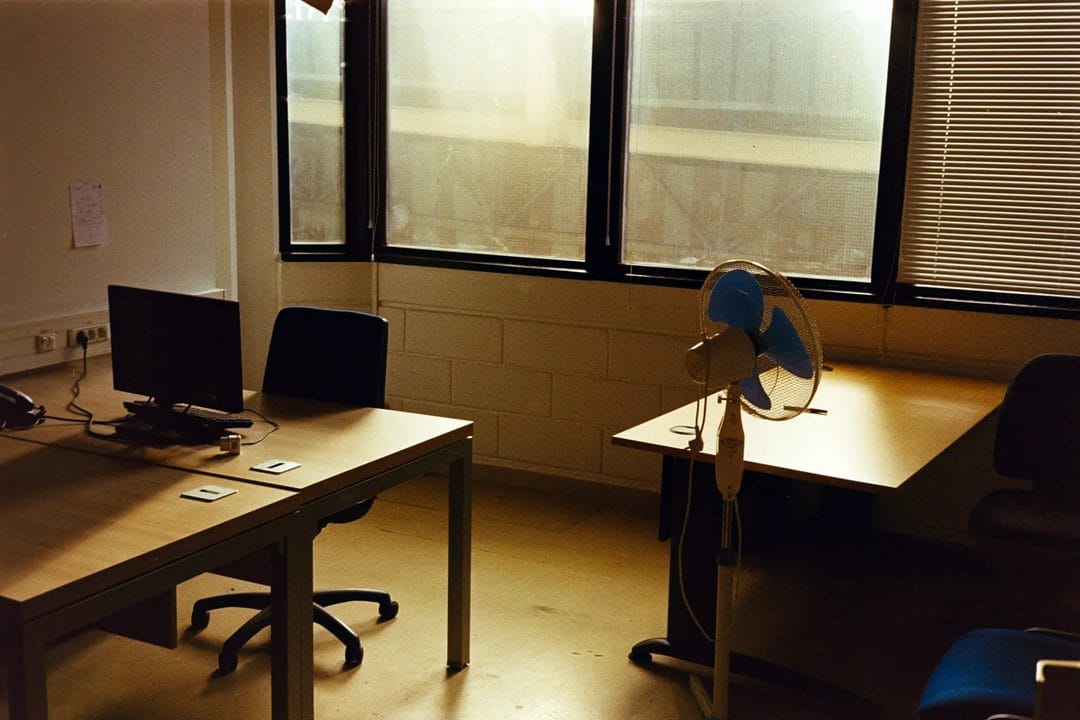
Under the Management of Health and Safety at Work Regulations 1999, employers must assess risks to staff and take reasonable steps to control them — and the Health and Safety Executive's own guidance treats thermal discomfort as one of those risks, alongside noise, lighting and workstation setup. In practice, that means an employer facing a genuine heatwave is expected to do something, even without a legal number to hit. Reasonable steps typically include relaxing the dress code, moving desks away from direct sun or south-facing windows, providing fans or portable cooling where the budget allows (a decent oscillating desk fan runs about £18–£25 at Argos or Screwfix; a portable air-conditioning unit from a brand like De'Longhi typically costs £180–£320), ensuring drinking water is genuinely accessible rather than technically available three floors away, and adjusting shift patterns or start times so the most physically demanding work happens before the office turns into a greenhouse. None of these are exotic asks. Most cost less than a single afternoon of lost productivity from a floor full of people who can't concentrate. A works council or staff forum, where one exists, is often the fastest route to getting several of these agreed at once rather than negotiating them individually with each line manager.
What You Can Actually Ask For This Week
Don't wait for HR to volunteer a fix — put the request in writing, because a verbal grumble about the heat evaporates as fast as the sweat on your collar and leaves no record if things don't improve. Email your line manager or whoever holds the facilities budget, describe the specific conditions (temperature if you've measured it, symptoms colleagues are reporting, how long it's been going on), and ask for a concrete response, not sympathy.
Reasonable requests worth making, roughly in order of how quickly they tend to get approved:
- A temporary switch to working from home on the worst one or two days, if your role allows it
- A relaxed dress code for the duration of the heatwave — no ties, no full suits, no strict formal footwear
- An earlier start and finish time so the most demanding tasks happen before the building peaks in temperature
- Fans, blinds, or a desk move away from a window that turns into a magnifying glass by mid-afternoon
- Extra, genuinely scheduled water breaks — not just "help yourself," which nobody ever quite manages to do when they're mid-deadline
None of this is a guaranteed yes, and a small employer with a single office and no facilities budget genuinely has fewer options than a large corporate with a flexible-working policy already on the books. But asking costs nothing, and a written request creates a paper trail that matters if the situation escalates or repeats every summer without any real fix.
When Heat Stops Being a Comfort Issue and Becomes a Safety One
For most people, a hot office is an irritation. For some employees, it's a genuine health risk, and the law treats that difference seriously. Pregnant workers are entitled to a specific risk assessment under Regulation 16 of the Management of Health and Safety at Work Regulations 1999, and heat exposure is a recognised factor employers are expected to consider — not as a favour, but as a legal duty. Staff with conditions like multiple sclerosis, certain heart conditions, or medication that affects temperature regulation may be entitled to reasonable adjustments under the Equality Act 2010 if their condition meets the definition of a disability, which covers considerably more health conditions than people assume.
This doesn't mean you can simply down tools and walk out the moment the office feels unpleasant. The right to refuse work under Section 44 of the Employment Rights Act 1996 is narrowly defined — it covers circumstances of serious and imminent danger, not general discomfort, and testing that boundary without documentation of an actual medical risk is a genuinely bad idea for your employment record. Where it does bite is the space between "a bit warm" and "someone has fainted at their desk." If a colleague is showing signs of heat exhaustion — dizziness, nausea, confusion, a rapid pulse — that's no longer a workplace-comfort conversation. ACAS guidance is explicit that employers should treat those symptoms as a first-aid situation requiring immediate action, not something to note down for next week's health and safety meeting.
Warehouse, Retail Floor and Delivery Roles Play by a Different Calculation
The 13°C minimum for physically demanding work exists precisely because manual labour generates its own body heat on top of whatever the room is already doing, and the same logic runs the other way once temperatures climb rather than drop. HSE guidance on manual handling in hot conditions recommends more frequent rest breaks, closer monitoring for early signs of heat stress, and — for warehouse operators running large fulfilment sites — genuine cooling stations near loading bays rather than a single water cooler by reception. Retail staff on a shop floor face a version of the same problem with none of the office worker's usual options: no thermostat to adjust, no realistic work-from-home fallback, and a dress code that's often set by head office rather than the branch manager standing in front of a customer at 33°C. Delivery drivers for firms running large fleets — Evri, DPD, Amazon's delivery partners — arguably have it worst of all, since a van cab heats up faster than almost any building and there's no walking away from it between drops. None of this falls outside the same legal framework already covered above; HSE's guidance on thermal comfort applies to a delivery van and a warehouse floor exactly as it applies to an office, even though the practical fixes look different — extra water carried in the cab, routes rearranged where operationally possible to front-load deliveries before the hottest part of the afternoon, and rest breaks that are actually taken rather than skipped to hit a delivery target. Employers who treat "outdoor and driving roles are just harder in summer, nothing to be done" as the final word are quietly ignoring a duty that applies to them just as much as it applies to the office three floors up.
The Manager's Side: Getting Ahead of the Next One
If you manage a team, waiting for a formal complaint before acting on heat is a mistake — by the time someone puts it in writing, three other people have already quietly lost an afternoon's productivity and started resenting the building. The Met Office issues heat-health alerts with several days' notice most summers, which gives any manager a practical trigger point: when an amber or red alert covers your area, that's the moment to pre-announce relaxed dress code, confirm the fans actually work rather than assuming last year's stock is fine, and flag to the team that home-working requests for the worst day or two will be approved without a fight.
The organisations that handle this well tend to have one thing in common: they treat heat as a predictable, recurring operational issue rather than a surprise each July, and they build a short, standing plan rather than improvising a response every single time a heatwave lands. That's a smaller ask than it sounds. A one-page policy — dress code trigger, WFH trigger, who owns the facilities budget for fans — takes an afternoon to write and saves several afternoons of ad hoc scrambling every summer after. The teams still improvising in year three of the same recurring problem aren't short on goodwill. They're short on someone who wrote it down the first time.